Fund for Export Development in Africa, the development equity impact investment arm of Egypt-based African Export-Import Bank (Afreximbank), has admitted Malawi as a new member country to support its export finance initiatives to boost intra-African trade.
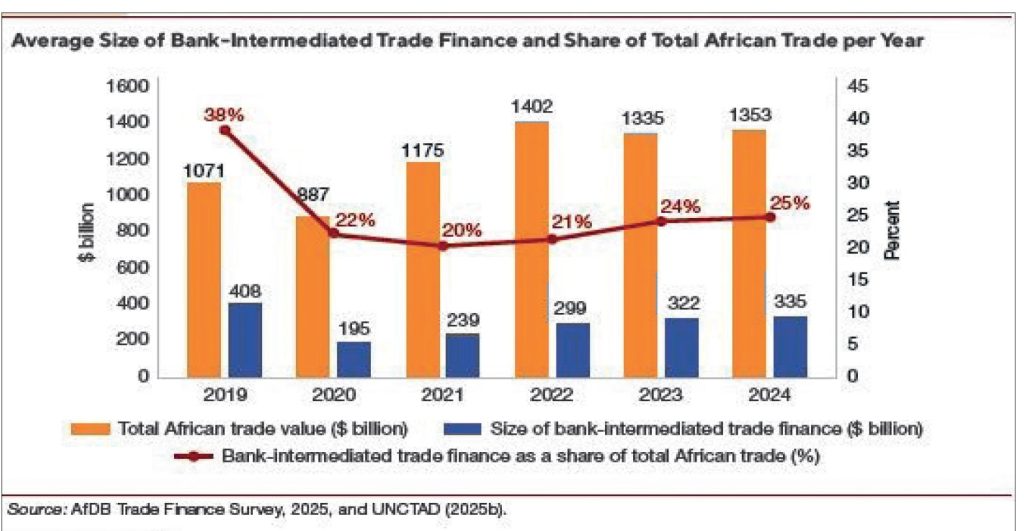
The African Development Bank (AfDB) Trade Finance Supply in Africa Report indicates that the fund has also admitted Egypt and Nigeria and will also benefit from the Pan-African Payment and Settlement System, a cross-border payments system for intra-African trade.
The fund works in collaboration with African central banks to provide a payment and settlement service in local currency such as the kwacha instead of the US dollar to which commercial banks and licensed payment service providers across the region can connect as ‘participants’.
The development comes at a time local firms are facing challenges to import strategic commodities such as fuel, fertiliser and medical drugs due to the reduced access to foreign exchange, a situation that has made it difficult to access letters of credit.
Reads the AfDB report in part: “Access to trade finance provides firms with opportunities to strengthen market integration, enhance economic growth and resilience and support market expansion.
“However, not all trade finance requests by firms are funded by banks engaged in trade finance. Historically, increased competition, insufficient limits with correspondent banks and limited foreign-exchange liquidity have been cited as the top three barriers to the supply of trade finance in Africa.”
Data in the report further show that the continent’s unmet demand was estimated at $74 billion (about K130 trillion) in 2024, representing 5.4 percent of total merchandise trade.
The AfDB says development finance institutions have become critical in bridging the financing gap, providing about $32 billion (about K56 trillion) annually in trade finance between 2020 and 2024, helping banks support businesses that would otherwise struggle to access funding.
The AfDB survey showed that between 2020 and 2024, 36 percent of banks cited limited foreign-exchange liquidity as a major constraint to trade finance growth relative to the 18 percent recorded the previous surveys.
Malawi Confederation of Chambers of Commerce and Industry (MCCCI) chief executive officer Daisy Kambalame said in an interview on Tuesday that the private sector continues to face challenges to access foreign exchange despite government reducing the mandatory surrender requirement to 25 percent from 30 percent for applicable exporters.
“Most businesses reported to have been producing below their capacity and improving the business environment is key to the country’s economic recovery,” she said.
A recent MCCCI Malawi Business Climate Survey revealed that the scarcity of foreign currency and exchange rate volatility were the top challenges, scoring 9.43 out of 10.
Over 80 percent of businesses have reported access to forex as one of the key challenges leading to operating levels of 50 to 75 percent below optimal levels.
As a result of these challenges, in 2025, at least 51.9 percent of the firms reported a capacity utilisation of below 50 percent with 37 percent of the businesses reported a utilisation rate higher than 50 percent, but lower than 75 percent. Only 11.1 percent reported a utilisation rate of above 75.
The Reserve Bank of Malawi (RBM) earlier conceded that local commercial banks were finding it difficult to secure letters of credit despite no local bank ever defaulting on its payment obligations.
Malawi’s import bill is dominated by food, fertiliser and fuel whose prices rose sharply in the first quarter of 2023.
According to the RBM, Malawi needs at least $250 million (about K438 billion) to import goods and services in a month.